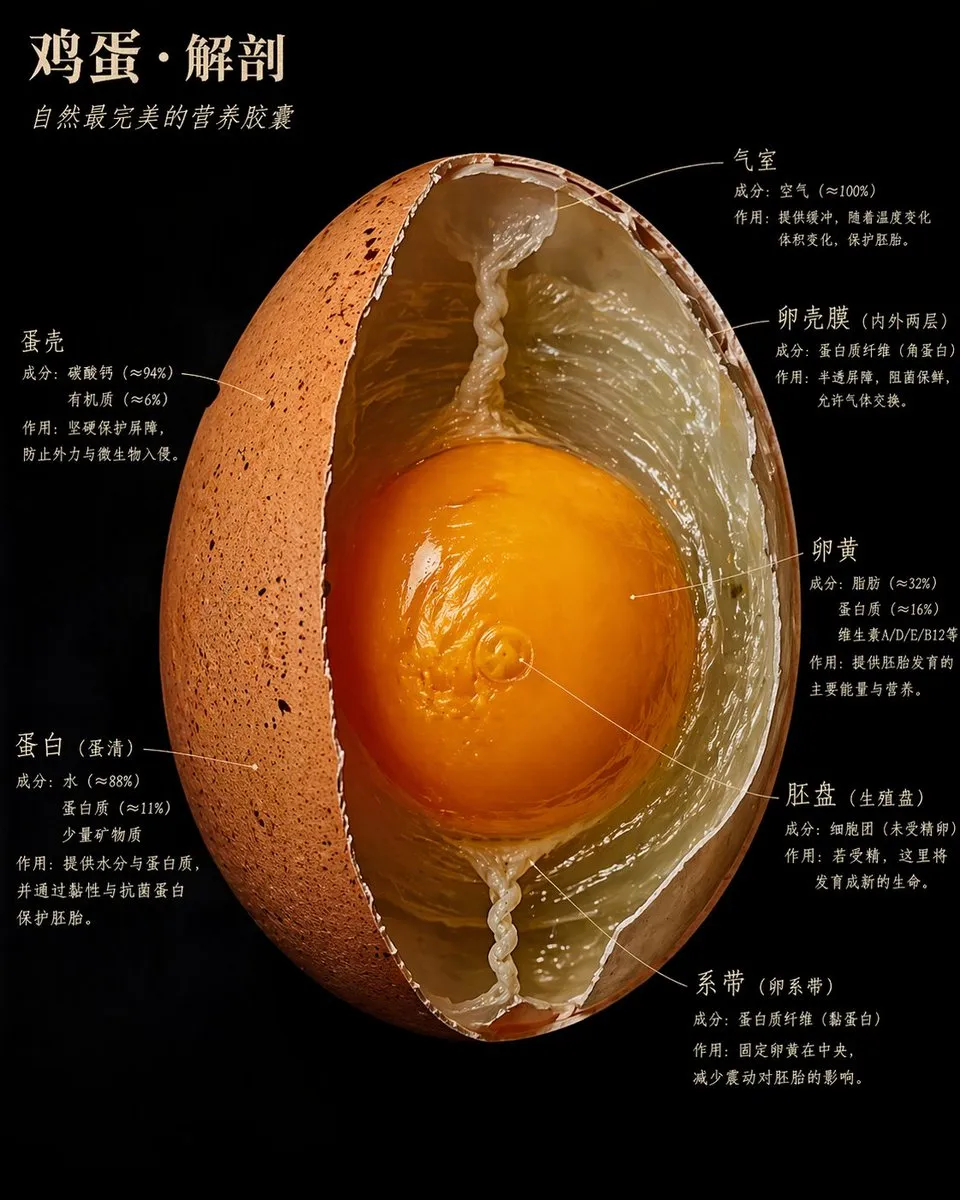
Naturalist-Style Food Specimen Cross-Section
“A single piece/slice/specimen of [food name], dissected in the manner of a naturalist master discovering a wild specimen. Cut open, spread apart, pinned down — like a precious museum artifact, yet illuminated as if Caravaggio were shooting for National Geographic. Every internal structure glows with the truth of its own material. The cross-section is sharp to the point of near violence. The interior is beautiful to the point of near sanctity. The image presents the complete specimen: One half remains intact, displaying [exterior surface description: texture/color/pattern]; The other half is cut open to the core, [internal core structure description: the 1–2 most important internal visual features] clearly visible. [Add 1–2 sentences describing the most visually striking cross-section details of this food] Background: pure black velvet. The [food name] floats within it, as if something precious and dangerous. Annotation text hugs the edges of structures closely, in a handwritten serif font, never floating in mid-air. The image includes the following annotations, each annotation in three lines: first line is the structure name, second line is composition data, third line is a plain-language explanation: [Structure 01 name] [Composition/data description] [What this structure does, why it matters] [Structure 02 name] [Composition/data description] [What this structure does, why it matters] [Structure 03 name] [Composition/data description] [What this structure does, why it matters] [Structure 04 name] [Composition/data description] [What this structure does, why it matters] [Structure 05 name] [Composition/data description] [What this structure does, why it matters] [Structure 06 name] [Composition/data description] [What this structure does, why it matters] Omit the rest; if there are more, continue in this format. Main title, upper left corner, warm ivory uppercase font: [Food Name] · Dissection Italic subtitle immediately below: [A single sentence revealing the essence of this food, no more than 15 characters] Overall aesthetic: Audubon naturalist illustration × Caravaggio chiaroscuro × the most beautiful scientific photography ever made. 4K precision, specimen lighting, ultimate internal detail. No clinical feel whatsoever — everything is alive. Realistic style, not a schematic diagram, not a cartoon, not a simplified illustration. Every material has authentic physical texture: rough, smooth, moist, dry, dense, porous.”
一颗/一块/一枚【食物名称】,以博物学大师发现野外标本的方式解剖。 剖开、展开、固定——如同博物馆的珍贵藏品, 却以卡拉瓦乔为《国家地理》掌镜时的光线照亮。 每一个内部结构都以自身的材质真相发光。 截面锋利得近乎暴力。内部美丽得近乎神圣。 画面中呈现完整标本: 一半保持原状,展示【外表面描述:质感/颜色/纹理】; 另一半剖开至核心,【内部核心结构描述:最重要的1—2个内部视觉特征】清晰可见。 【补充1—2句该食物最具视觉张力的横截面细节描述】 背景:纯粹的黑丝绒。 【食物名称】悬浮其中,如同某件珍贵而危险的事物。 标注文字紧贴结构边缘,手写感衬线字体,绝不悬空飘浮。 画面包含以下标注,每处标注三行:第一行结构名称,第二行成分数据,第三行一句人话: 【结构01名称】 【成分/数据说明】 【这个结构在做什么,为什么重要】 【结构02名称】 【成分/数据说明】 【这个结构在做什么,为什么重要】 【结构03名称】 【成分/数据说明】 【这个结构在做什么,为什么重要】 【结构04名称】 【成分/数据说明】 【这个结构在做什么,为什么重要】 【结构05名称】 【成分/数据说明】 【这个结构在做什么,为什么重要】 【结构06名称】 【成分/数据说明】 【这个结构在做什么,为什么重要】 省略其他如果有继续保持这个格式 主标题,左上角,暖象牙白大写字体: 【食物名称】·解剖 斜体副标题紧随其下: 【一句揭示这种食物本质的话,不超过15字】 整体气质:奥杜邦博物插画×卡拉瓦乔光影×有史以来最美的科学摄影。 4K精度,标本照明,极致内部细节。 没有任何临床感,一切都鲜活。 写实风格,非示意图,非卡通,非简化图解。 每一种材质都有真实的物理质感: 粗糙的、光滑的、湿润的、干燥的、致密的、疏松的。
Tips
- By @GeekCatX